
Hip Pain When You Lie on Your Side
You have not had a full night on that side in months. You settle onto the sore hip and within minutes there is a deep burning ache on the outside of it. So you roll over, and after a while that side aches too.
Where it sits, and what is under it
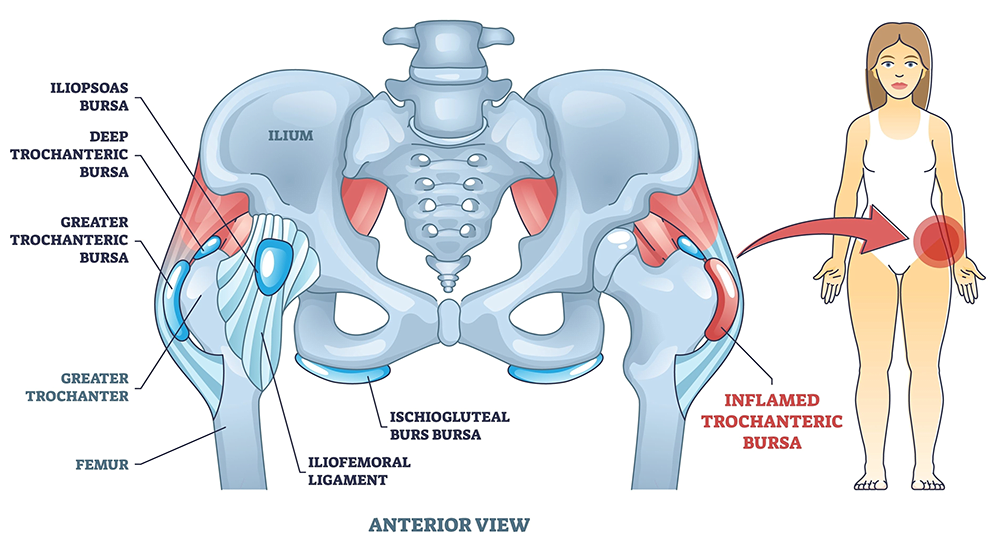
Press two fingers on the widest part of the outside of your hip, the bone you can feel through the skin below your waist. If that spot is sore, and it is the spot that wakes you, the problem is almost certainly the tendons attaching there rather than the hip joint.
Those tendons hold your pelvis level every time you stand on one leg. Irritated, they tolerate movement reasonably well and hate being squashed. Side lying puts your weight straight down onto the attachment, which is why the pain is often mild by day and unbearable at 2 a.m.
Why the other side hurts too
Roll onto the good hip and the painful leg is on top. Unsupported, it drops forward and across your body, pulling the band of tissue on the outer thigh tight over the sore tendon and pressing it into the bone. The painful hip gets compressed even when it is not on the mattress.
This is not the hip joint
Hip joint problems report to a different address: the groin and the front of the thigh, worse bearing weight and turning, provoked by pulling on a sock or getting out of a car. This one is on the outside, tender to touch, and worst lying on it.
If groin pain and lost rotation are the main complaint, that points at the joint itself, and hip pain covers it.
Who gets this
It is common, and not spread evenly. Women from around their forties onward make up most of the people who have it, and changes in tendon tissue around menopause are part of the reason.
The stretch you have been doing is part of the problem
Search this symptom and the first advice you get is a figure-four stretch, or pulling the bent knee across your body. Most people reading this have been doing one daily for months.
Here is the trouble. Pulling the leg across the midline is the exact position that clamps the tendon against the bony point it attaches to. The stretch feels like it is reaching the right place, and it is, but what it reaches it with is pressure. A tendon sore from being compressed does not calm down by being compressed harder twice a day. Months of stretching that changed nothing is information, not a reason to stretch harder.
Setting the bed up so it stops being provoked
A pillow between your knees, thick enough that the top knee stays level with the hip instead of dropping. Run it toward the ankles so the lower leg is carried too.
Sleep on the less painful side while it settles. Temporary, not a rule for life.
Soften the surface under the sore side if lying on it is unavoidable. A topper or folded blanket spreads the pressure instead of loading one point of bone.
What keeps it going during the day
A sudden jump in walking, particularly hills. St. Thomas supplies plenty of those.
Standing a long time with your weight parked on one leg, hip pushed out sideways.
Sitting with your legs crossed for hours.
What actually settles it
Two steps, in that order. Take the compression away first, because a tendon squashed eight hours a night cannot make progress whatever else you do. Then load it. Tendons rebuild under gradual load, not under rest or stretching, and what that looks like depends on the exam, so it gets prescribed rather than copied off a page.
How we sort it out at Tradewinds
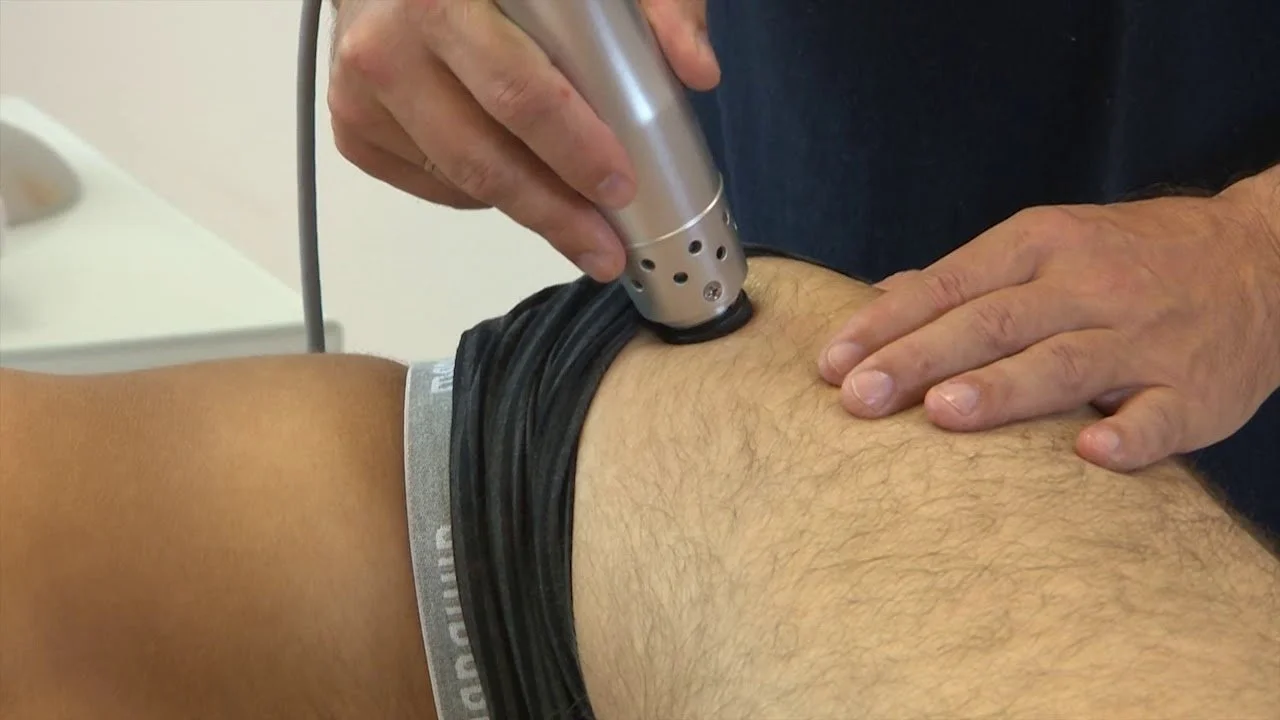
Tradewinds Chiropractic & Wellness in Charlotte Amalie presses over the bony point to confirm the tenderness is there and not in the joint, times how long you can stand on that leg alone, tests hip range, and checks the low back and sacroiliac joints. Dr. Keys is the Chair of the Virgin Islands Board of Chiropractic Examiners, a member of the Virgin Islands Chiropractic Society, and the International Chiropractors Association representative for the U.S. Virgin Islands. Where the exam points at the tendon, care is hands-on soft tissue work, joint work where the hip, pelvis or low back are stiff, and a graded loading plan. Methods are on our services page.
When this needs urgent care instead
Call 911 or go to the nearest emergency room for:
Inability to put weight on the leg after a fall. In an older adult that can be a hip fracture even when walking is still possible, and it needs imaging the same day
A hot, swollen, red hip, especially with a fever, which can mean an infected joint
Leg weakness or numbness that is getting worse
See a physician promptly for night pain that is unrelenting no matter how you lie, particularly with unexplained weight loss or a history of cancer.
Getting seen
We are in the VI Medical Foundation Building, Suite 202, 9150 Estate Thomas, St. Thomas, USVI 00802. Hours: Mon, Wed, Thu: 10:00 am to 1:00 pm and 2:00 pm to 6:00 pm. Tue, Fri: 7:00 am to 2:00 pm. Closed Sat and Sun. Call (340) 690-4994. We take walk-ins and same-day appointments. New patient forms are online, and Tradewinds has more than 180 five-star Google reviews.
Questions patients ask
Why does my hip hurt when I lie on my side at night?
The usual reason is irritation of the tendons that attach to the bony point on the outside of the hip. Lying on that side presses your body weight directly onto the attachment, which is exactly what those tendons tolerate worst. The spot is tender if you press it with a finger, and the pain is often mild during the day and severe in bed, which is the pattern that gives it away.
Why does it also hurt when I lie on my other side?
Because the sore leg is now on top, and if nothing is holding it up it falls forward and down across your body. That position pulls the tissue on the outside of the thigh tight over the tendon and squeezes it against the bone. A firm pillow between the knees, running down toward the ankles, keeps the top leg level with the hip and takes that squeeze away.
Is pain on the outside of my hip the same as hip arthritis?
Usually not. A worn hip joint reports pain into the groin and the front of the thigh, gets worse putting weight through the leg and rotating it, and shows up putting on socks or getting out of a car. Outer hip pain that is tender to touch and worst lying on it is more often the tendons beside the joint rather than the joint itself. The two are separated by an exam, not by a symptom list.
Should I stretch my outer hip or IT band if it hurts to lie on it?
Usually not, and the stretches most often recommended for it tend to make it worse. Pulling the leg across your body compresses the tendon against the bony point it attaches to, and that compression is part of what is irritating it. If you have been stretching daily for weeks or months with no change, that is a sign to stop and have it examined rather than to stretch harder.
How should I sleep if I cannot lie on my hip?
Put a pillow between your knees so the top leg cannot drop across your body, sleep on the less painful side for now, and if you have to lie on the sore side, soften what is under it with a topper or a folded blanket to spread the pressure. Those changes stop the tendon being compressed all night. Getting it stronger under gradual load is what changes it over the longer run.
