
Sciatica Treatment in St. Thomas, U.S. Virgin Islands
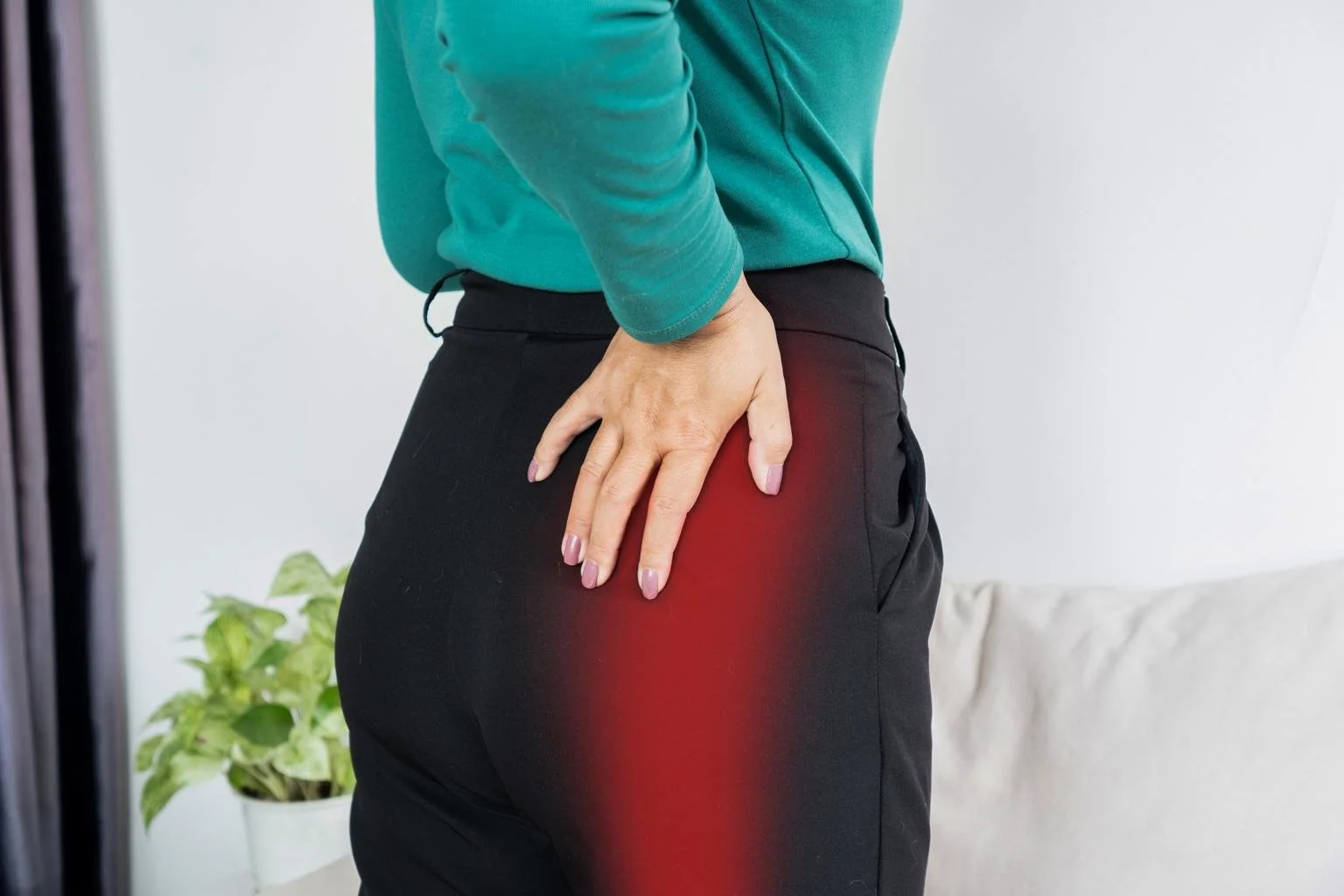
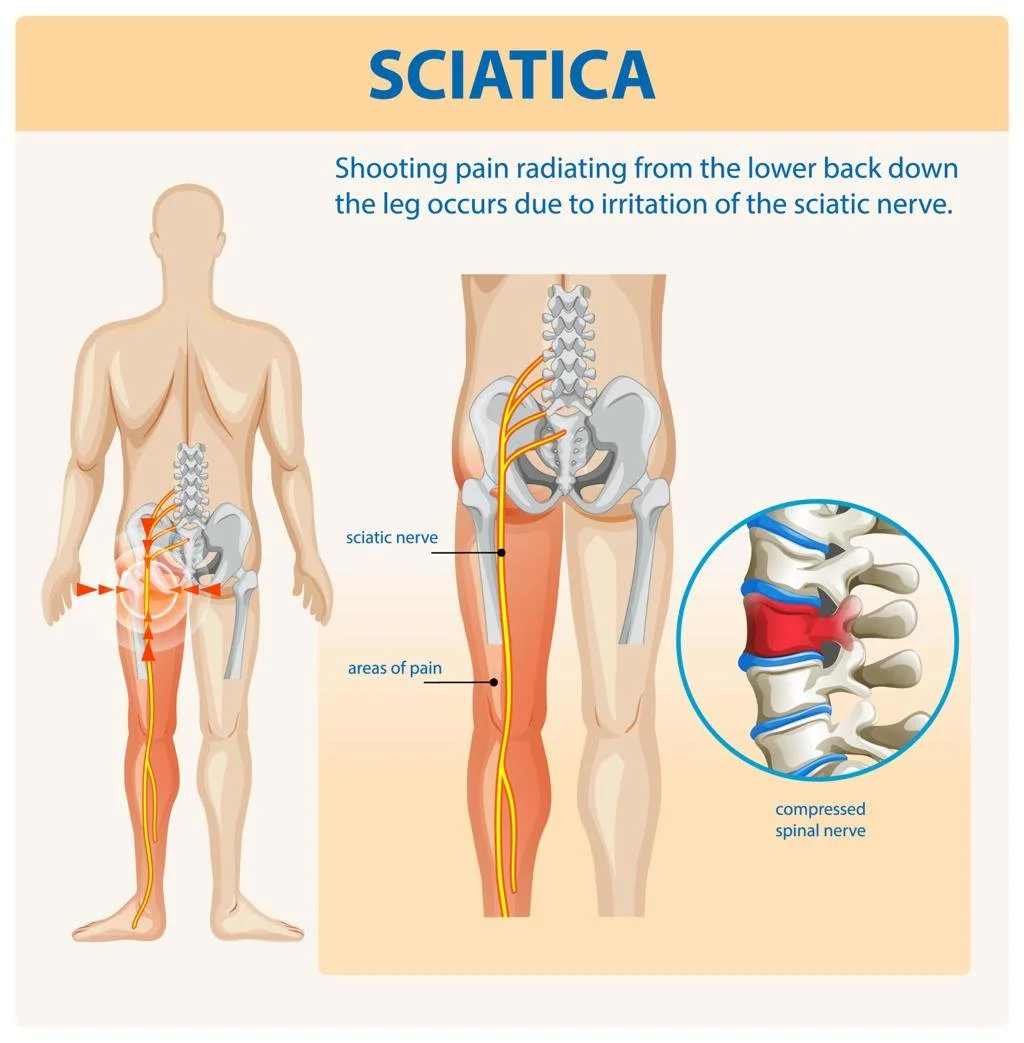
Sciatica is pain that starts in the low back or buttock and runs down the back of one leg, sometimes all the way to the foot. Dr. Bradley Keys, Doctor of Chiropractic, has treated it at Tradewinds Chiropractic & Wellness in St. Thomas since the clinic opened in April 2018, and most cases respond to conservative care without injections or surgery.
What sciatica feels like
A deep ache in one buttock that will not let up. A sharp, electric line of pain down the back of the thigh and calf when you cough, sneeze, or stand up from a chair. Pins and needles or a patch of numbness on the outside of the foot or the big toe. A leg that feels weak after sitting for a while.
It is usually one leg, not both, and it is often worse with sitting, bending forward, or driving. Many people have had low back pain on and off for years before the leg pain shows up.
What is usually going on
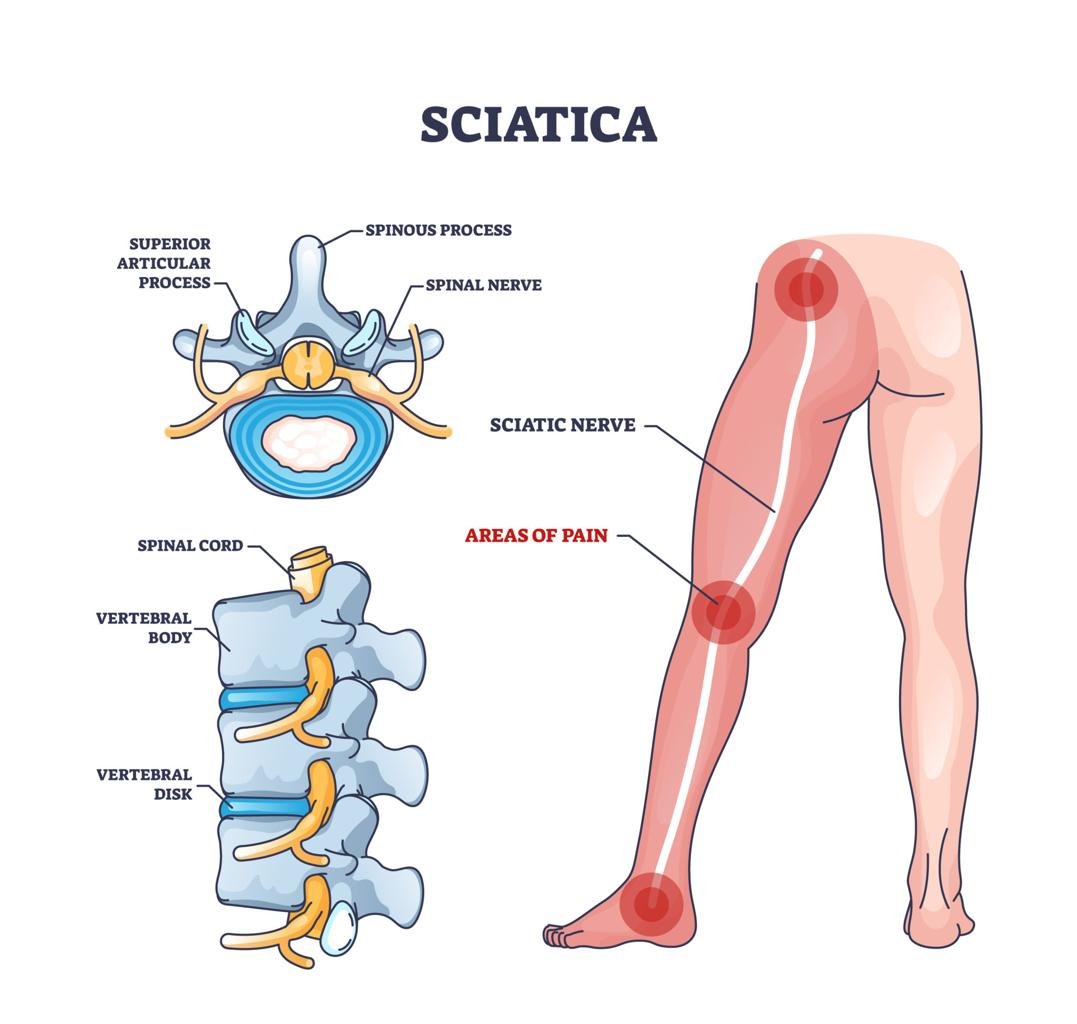
The sciatic nerve is built from nerve roots in the lower back. When one of those roots is irritated or pinched, you feel it along the path of the nerve, which is why a problem in your back shows up in your calf.
The most common causes are a bulging or herniated disc pressing on a root, narrowing of the nerve openings (stenosis, more common after 50), a low back joint that has stopped moving well, or a tight piriformis muscle in the buttock squeezing the nerve. In younger patients it is most often the disc. In older patients it is more often arthritis and narrowing.
Sciatica is a symptom, not a diagnosis. Working out which of those structures is the source is the point of the first visit, because it changes what we do and how fast we expect you to improve.
How we treat it at Tradewinds
The first visit is a history and a hands-on exam: a straight leg raise and a check of reflexes, strength and sensation by nerve root. If the picture calls for it, we take digital x-rays on site. If you already have an MRI, bring the report and the disc. The free MRI review is still offered. Medicare patients are not eligible for it.
Dr. Keys is the Chair of the Virgin Islands Board of Chiropractic Examiners, a member of the Virgin Islands Chiropractic Society, and the International Chiropractors Association representative for the U.S. Virgin Islands.
Care for sciatica at Tradewinds usually combines three things, all listed on our services page:
Chiropractic adjustment, including flexion-distraction. Flexion-distraction is a gentle table technique. You lie face down, the lower section of the table drops and flexes slowly, and Dr. Keys uses that motion to open space at the disc and the nerve openings. There is no twisting and no sudden thrust, which is why it is the usual choice for disc-related sciatica. Where the exam points to a stuck joint rather than a disc, a Gonstead or Diversified adjustment is used instead.
Spinal rehabilitation. Specific exercises that take load off the irritated root and keep it off: directional movements, hip and core work, and coaching on how to sit, lift and sleep while the nerve settles.
Re-checks against a timeline. We re-examine as we go. Most sciatica improves meaningfully within a few weeks of consistent care. If you are not clearly better by then, we say so and arrange imaging or a referral. Sciatica overlaps heavily with lower back pain; that page covers the back-only version.
When you should see someone else
Go to the emergency room, not our office, if you have any of these with your sciatica:
New loss of bowel or bladder control, or trouble starting to urinate
Numbness in the groin, inner thighs or the area you sit on (the saddle area)
Weakness that is getting worse, such as a foot that slaps or drags when you walk
Pain in both legs that came on quickly
Fever with back pain, or back pain after a serious fall or car crash
See an orthopedist or neurosurgeon, usually with an MRI first, if leg pain is severe and not improving after four to six weeks of conservative care. See a neurologist if your main symptom is numbness or tingling in both feet with little or no back pain; that is more likely peripheral neuropathy, and our peripheral neuropathy page covers the difference.
Visitors, crew and cruise passengers
Boats are hard on a sciatic nerve: long hours at the helm, hauling on lines, sleeping in a narrow bunk. Charter crew out of Yacht Haven Grande, Crown Bay and Red Hook are a steady part of our practice. If you are a cruise passenger and your leg flares up mid-trip, the clinic is a short drive from the Havensight port. Walk-ins and same-day appointments work the same for visitors as for residents.
Getting seen
Tradewinds Chiropractic & Wellness is in the VI Medical Foundation Building, Suite 202, 9150 Estate Thomas, St. Thomas, USVI 00802, just east of Charlotte Amalie. Hours are Mon, Wed, Thu: 10:00 am to 1:00 pm and 2:00 pm to 6:00 pm. Tue, Fri: 7:00 am to 2:00 pm. Closed Sat and Sun.
Call (340) 690-4994 or email info@tradewindschiropractic.com. We take walk-ins and same-day appointments. We see patients from St. Thomas, St. John and Water Island and have more than 180 five-star Google reviews. New patient forms are on the forms page to print and fill in.
Questions patients ask
Who treats sciatica in St. Thomas, Virgin Islands?
Dr. Bradley Keys at Tradewinds Chiropractic & Wellness in Estate Thomas treats sciatica with chiropractic adjustment, flexion-distraction and spinal rehabilitation. The clinic has been open since April 2018 and sees residents of St. Thomas, St. John and Water Island as well as visiting crew and cruise passengers. Call (340) 690-4994.
Can a chiropractor help sciatica, or do I need surgery?
Most sciatica improves with conservative care and never needs surgery. Surgery is usually reserved for cases with progressive weakness, loss of bowel or bladder control, or severe pain that has not improved after weeks of good conservative treatment. We examine you first and tell you plainly which group you are in.
How long does sciatica take to get better?
Most people notice a clear change within a few weeks of consistent care, and the leg pain usually improves before the back pain does. Disc-related sciatica can take longer than joint or muscle causes. We re-check at set points and change course if you are not on track.
What is flexion-distraction, and is it safe if I have a herniated disc?
Flexion-distraction is a slow, gentle table technique that flexes the lower spine and opens space at the disc and nerve openings. There is no twisting and no sudden thrust. It is one of the most common chiropractic methods for disc-related sciatica, and we adjust the pressure to what your exam and your comfort allow.
Do I need an MRI before I come in?
No. Most sciatica can be assessed with a history, a hands-on exam and, if needed, digital x-ray in the office. An MRI is ordered when red flags are present or when you are not improving as expected. If you already have one, bring it.
