
Frozen shoulder and rotator cuff treatment in St. Thomas, U.S. Virgin Islands
A shoulder that will not lift is a different problem from a shoulder that hurts when it lifts. We see both every week in Charlotte Amalie, and the first job is telling them apart, because the care and the timeline differ.
Tradewinds Chiropractic & Wellness treats frozen shoulder (adhesive capsulitis) and rotator cuff tendinopathy, and we refer suspected cuff tears to an orthopedist. For shoulder pain in general, including impingement and neck-referred pain, see our shoulder pain page.
What this feels like
Frozen shoulder comes on without a clear injury, most often between ages 40 and 60, and more often in women. It moves through three stages:
Freezing. Pain first, then stiffness creeping in. Reaching behind your back or pulling a shirt over your head gets hard. Night pain is common. This stage can last two to nine months.
Frozen. The pain eases but the motion is locked. The arm will not go out to the side or rotate outward, no matter who moves it. Often four months to a year.
Thawing. Motion slowly returns, over several months to a year or more.
Honest timeline: most frozen shoulders take one to two years, sometimes longer, and a minority leave some lasting stiffness. Care shortens the painful stage and protects the motion you have. It does not skip stages.
Rotator cuff tendinopathy hurts with use and at night, but the shoulder still moves when someone else moves it for you. A painful arc when lifting the arm out to the side, an ache down the outside of the upper arm, pain lying on that side. A cuff tear adds weakness: you cannot hold the arm up out to the side, or lifting it takes a shrug of the whole shoulder.
What is usually going on
In frozen shoulder the capsule, the sleeve of tissue around the joint, becomes inflamed, thickens, and contracts. People with diabetes get it several times more often than people without, and it tends to be more stubborn. Thyroid disease and time in a sling also raise the odds. Mention diabetes at the first visit; it changes the plan.
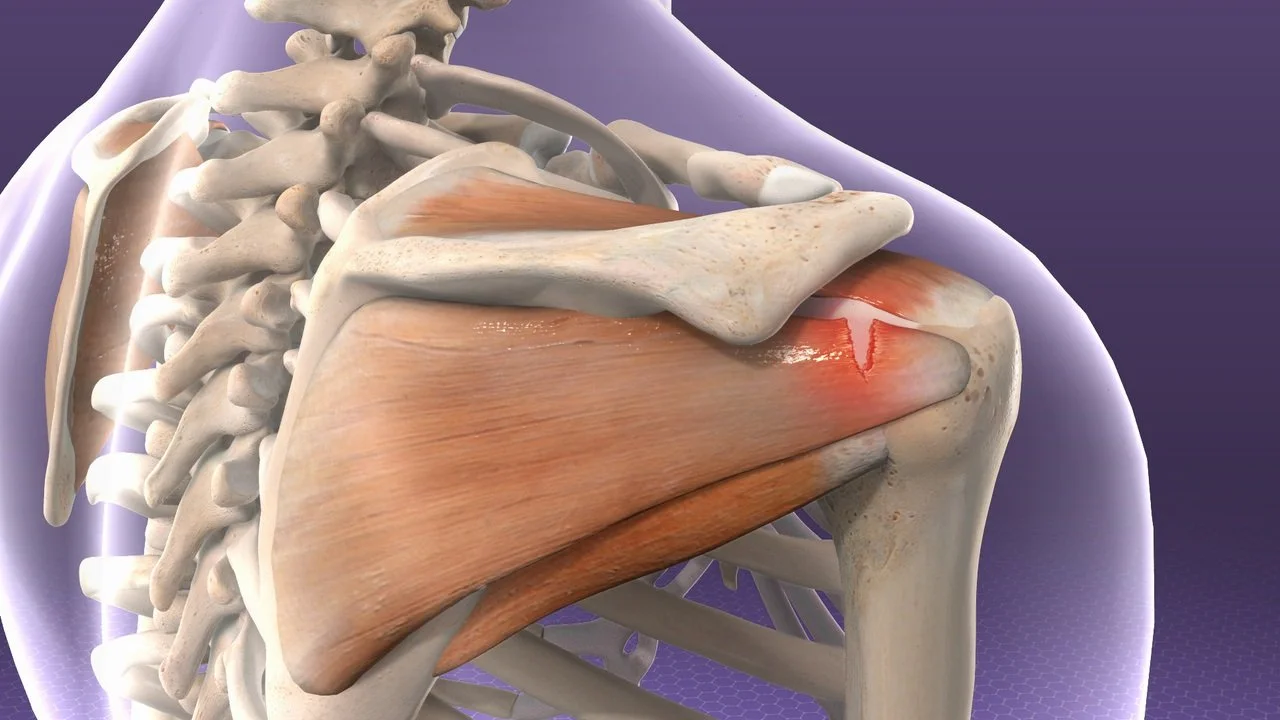
In rotator cuff tendinopathy the tendons of the four small muscles that steady the ball in the socket are overloaded by overhead work, hauling, or paddling, and sometimes pinched under the bony roof of the shoulder. Calcium deposits in the tendon (calcific tendinopathy) produce a sharp, sometimes severe pain. A tear can be gradual fraying in an older shoulder or a sudden event after a fall or a heavy pull.

How we treat it at Tradewinds
The exam sorts out which you have: how far the arm moves on its own and how far we can move it, strength of each cuff muscle, impingement tests, shoulder blade motion, and a neck screen. Dr. Keys is the Chair of the Virgin Islands Board of Chiropractic Examiners, a member of the Virgin Islands Chiropractic Society, and the International Chiropractors Association representative for the U.S. Virgin Islands.
For frozen shoulder: gentle mobilization of the joint within what it tolerates, adjustment of the upper back and ribs so the shoulder blade can make up some lost motion, soft tissue work around the joint, and a daily home stretching routine. In the freezing stage we go easy, because forcing a painful capsule makes it worse. In the thawing stage we push range harder.
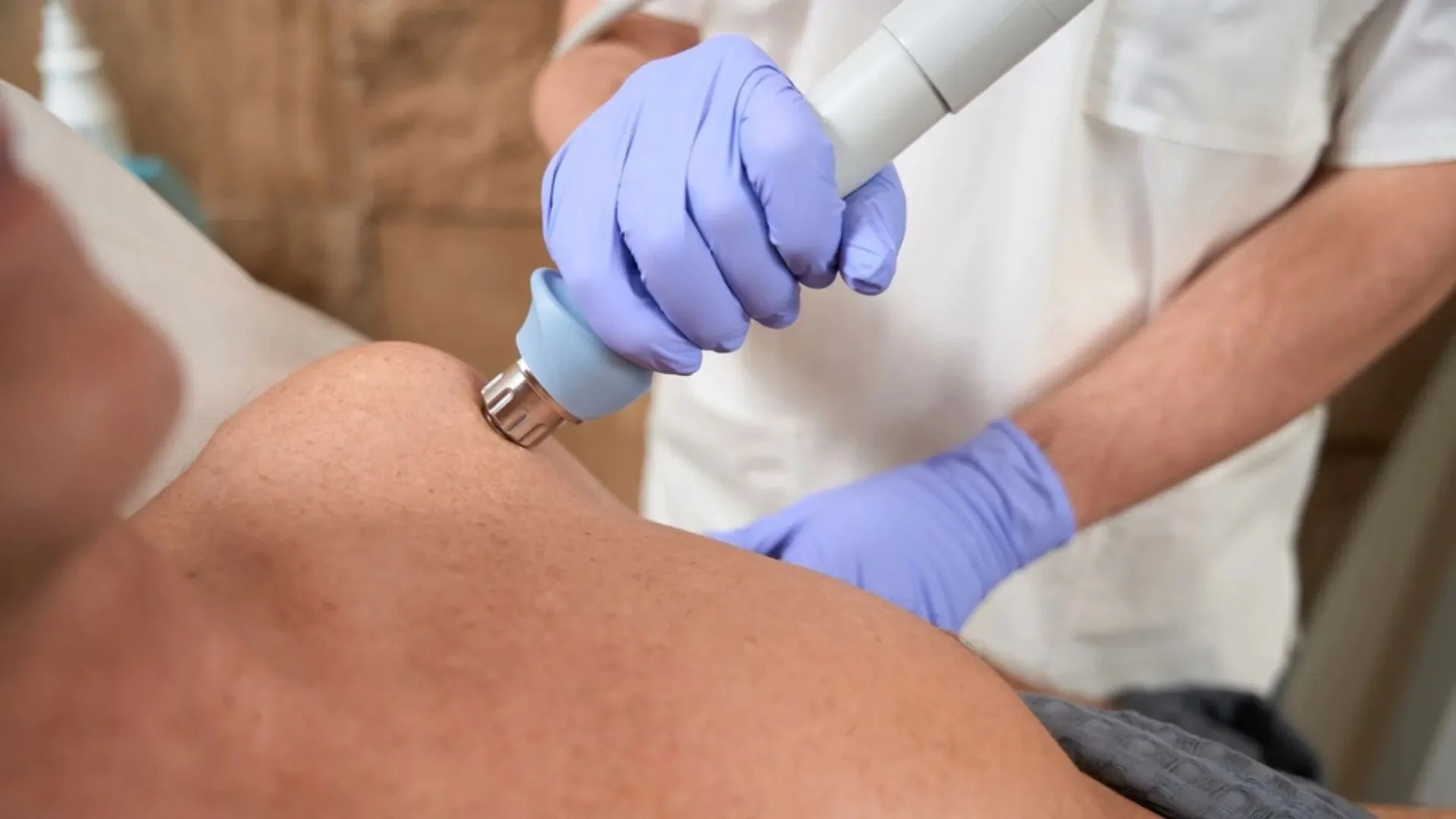
For rotator cuff tendinopathy: extremity adjustment of the shoulder and collarbone joints, instrument assisted soft tissue work along the tendons, a progressive strengthening program for the cuff and shoulder blade, and shockwave therapy for calcific tendinopathy or tendon pain that has lasted months. Shockwave has reasonable support for calcific deposits.
These services are on our services page. We set a visit count and a re-check date and tell you plainly whether the plan is working.
When you should see someone else
See an orthopedist if you have:
Weakness after a fall, a hard pull, or a dislocation. A full-thickness cuff tear needs an orthopedic opinion and usually an MRI, and repair works better early.
An arm you cannot lift out to the side at all, or one that drops when you try to hold it up.
A frozen shoulder not changing after a few months of care, especially with diabetes. A cortisone injection can shorten the painful stage, and that is an orthopedist conversation.
No progress after several weeks of appropriate care for a cuff problem.
Go to the emergency room for fever, redness, or a hot swollen joint. Call 911 for shoulder or arm pain with chest pressure or shortness of breath.
If you already have an MRI, bring it. Our free MRI review covers spinal MRIs only.
Visitors, crew and cruise passengers
A frozen shoulder is not a one-visit problem, so for visitors we focus on the exam, which stage you are in, and a home routine to take to your own provider. Crew out of Red Hook or Yacht Haven Grande come in between charters, and a cuff flare mid-season gets a plan you can follow on the boat.
Getting seen
Tradewinds Chiropractic & Wellness is in the VI Medical Foundation Building, Suite 202, 9150 Estate Thomas, St. Thomas, USVI 00802, just east of Charlotte Amalie. Call (340) 690-4994 or email info@tradewindschiropractic.com. We take walk-ins and same-day appointments.
Hours: Mon, Wed, Thu: 10:00 am to 1:00 pm and 2:00 pm to 6:00 pm. Tue, Fri: 7:00 am to 2:00 pm. Closed Sat and Sun.
Tradewinds has more than 180 five-star Google reviews. Meet Dr. Keys.
Questions patients ask
Where can I get frozen shoulder treatment in St. Thomas?
Tradewinds Chiropractic in Charlotte Amalie treats frozen shoulder with gentle joint mobilization, upper back and rib adjustment, soft tissue work, and a daily home stretching routine matched to the stage you are in. We are honest that the condition runs its course over many months.
I have rotator cuff pain. Who do I see in St. Thomas USVI?
Start with an exam at Tradewinds Chiropractic. Tendinopathy and impingement respond to adjustment, soft tissue work, strengthening, and shockwave therapy for calcific or long-standing tendon pain. If the exam shows weakness that suggests a full tear, we refer you to an orthopedist for imaging.
My shoulder won't lift. Can a chiropractor in the Virgin Islands help?
It depends on why. If the shoulder is stiff because the capsule has tightened (frozen shoulder), yes, we treat that. If the arm cannot lift because of weakness after an injury, that may be a rotator cuff tear, and you need an orthopedist first. The exam tells the two apart.
How long does frozen shoulder last?
Usually one to two years from the first pain to near-full motion, moving through freezing, frozen, and thawing stages. Care can shorten the painful stage and protect the motion you have, but it does not skip stages. People with diabetes often have a longer course.
Does diabetes cause frozen shoulder?
Diabetes does not cause it directly, but people with diabetes get frozen shoulder several times more often than people without, and it tends to be more stubborn. Tell us if you have diabetes at the first visit, because it affects the plan and how soon we discuss an injection with an orthopedist.
